A tree branch on the trail, a stray fingernail, a speck of metal from a grinder: it only takes a moment to scratch or injure an eye. A scratch on the cornea, called a corneal abrasion, is one of the most common eye injuries, and it can hurt a lot.
This guide explains the signs of a corneal abrasion, first aid for common eye injuries and simple ways to protect your eyes, using information from the American Academy of Ophthalmology (AAO) and the National Eye Institute (NEI).
What is a corneal abrasion?
A corneal abrasion is a scratch or scrape on the surface of the cornea, the clear front window of the eye. The AAO says fingernails, makeup brushes and tree branches are common culprits. Rubbing your eye and very dry eyes can also cause one.
Why does it hurt so much? The AAO explains that the cornea has hundreds of times more pain receptors than your skin.
Signs of a scratched cornea
- Feeling like something is stuck in your eye
- A red, painful, watery eye
- Blurry or hazy vision
- Being extra sensitive to light
"Eye injuries can cause vision loss or blindness. That's why having an ophthalmologist or other medical doctor examine the eye as soon as possible is important, even if the injury seems minor at first."
AMERICAN ACADEMY OF OPHTHALMOLOGY
First aid for common eye injuries
The AAO says not to try to treat a serious eye injury yourself. Here is its first-aid guidance:
- Sand, dirt or dust. Don't rub your eye. Blink several times and let tears flush the particle out. Try lifting your upper eyelid over your lower lashes, or rinse with eyewash, saline or clean running water. See a doctor if you can't get it out or it still feels like something is there.
- Metal, glass or other man-made material. These can become embedded in the eye and be more serious. If something is stuck in your eye, don't try to remove it. Get medical care.
- A blow to the eye. Gently apply a small cold compress without pressure. The AAO says even a light blow can cause a serious injury, such as a retinal detachment, so call your ophthalmologist or go to the emergency room if you have a black eye, pain or vision changes.
- A cut or puncture. Gently cover the eye with a shield, such as the bottom of a paper cup taped to the bones around the eye. Don't rinse it, press on it or remove objects, and get emergency help.
Chemical splash? Rinse first, then get help
The AAO says to immediately flush the eye with plenty of clean water and then get emergency medical treatment right away. If you can, bring information about the chemical. (AAO)

How a scratched eye is diagnosed and treated
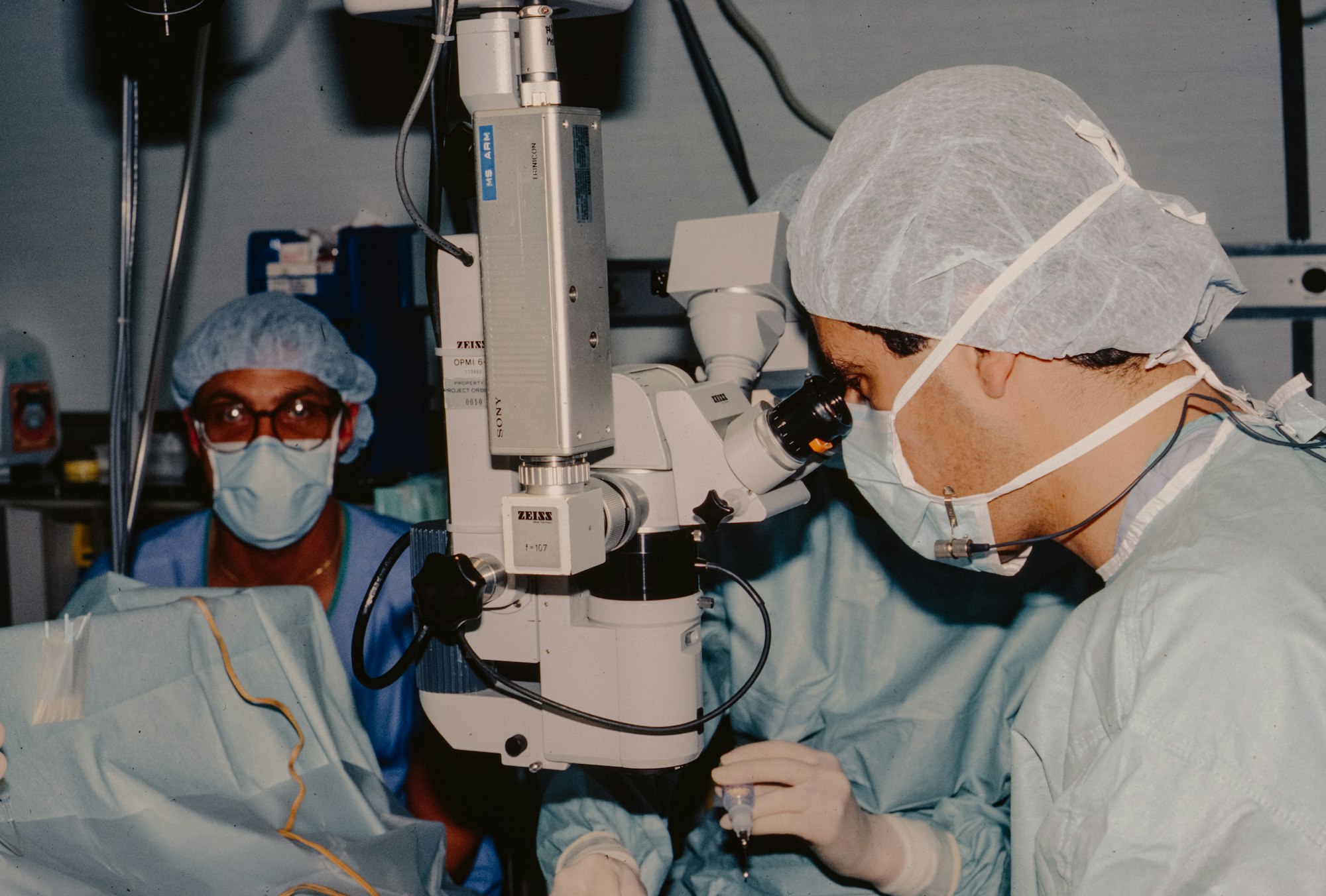
An ophthalmologist can check your eye and recommend treatment based on what they find. Here is what to expect, according to the AAO.
1. A dye test
Your ophthalmologist puts a dye called fluorescein on the surface of your eye, then looks at it with a slit lamp. The dye makes a scratch on the cornea easier to see.
2. Soothing and protecting
Treatment may include moisturizing drops or ointment, antibiotic drops or ointment to prevent infection, or a special contact lens to ease pain and help healing.
3. How long healing takes
The AAO says a small corneal abrasion will probably heal in 1 to 2 days. A larger one may take about a week.
4. While you heal
Don't rub your eye, since rubbing can slow healing or make it worse. Avoid wearing your usual contact lenses until your ophthalmologist says it's OK.
5. Contact lens safety
The AAO says contacts that are old or don't fit well can scratch your eye. Wash your hands before handling lenses, never use water or saliva on them, don't sleep in daily-wear lenses, and replace your case at least every 3 months. (AAO)
Eye protection checklist
- Wear safety glasses or goggles when mowing, trimming or using a weed trimmer
- Wear them when cutting wood or metal, or using power tools like sanders and drills
- Wear protective eyewear for sports
- Protect your eyes when using chemicals like bleach
- Keep children's fingernails trimmed
- Clean, store and replace contact lenses as directed (NEI)
Corneal abrasion care in Southern Utah
Mountain Eye Institute treats corneal abrasions at our Cedar City ophthalmology practice. If you think you've scratched your eye, call our office. For a serious injury, such as a cut, a puncture, an object stuck in the eye or a chemical splash, get emergency care right away.
Spend time outdoors? Read our sun safety guide for your eyes. You may also like our guides to dry eye and floaters and flashes.
Sources
- AAO: What Is a Corneal Abrasion?
- AAO: Recognizing and Treating Eye Injuries
- NEI: Corneal Conditions
- AAO: Contact Lens Care
This article is for general education and isn't a substitute for advice from your eye doctor.
Think you've scratched your eye?
Call our team to have it checked. For serious injuries or chemical splashes, get emergency care right away.