

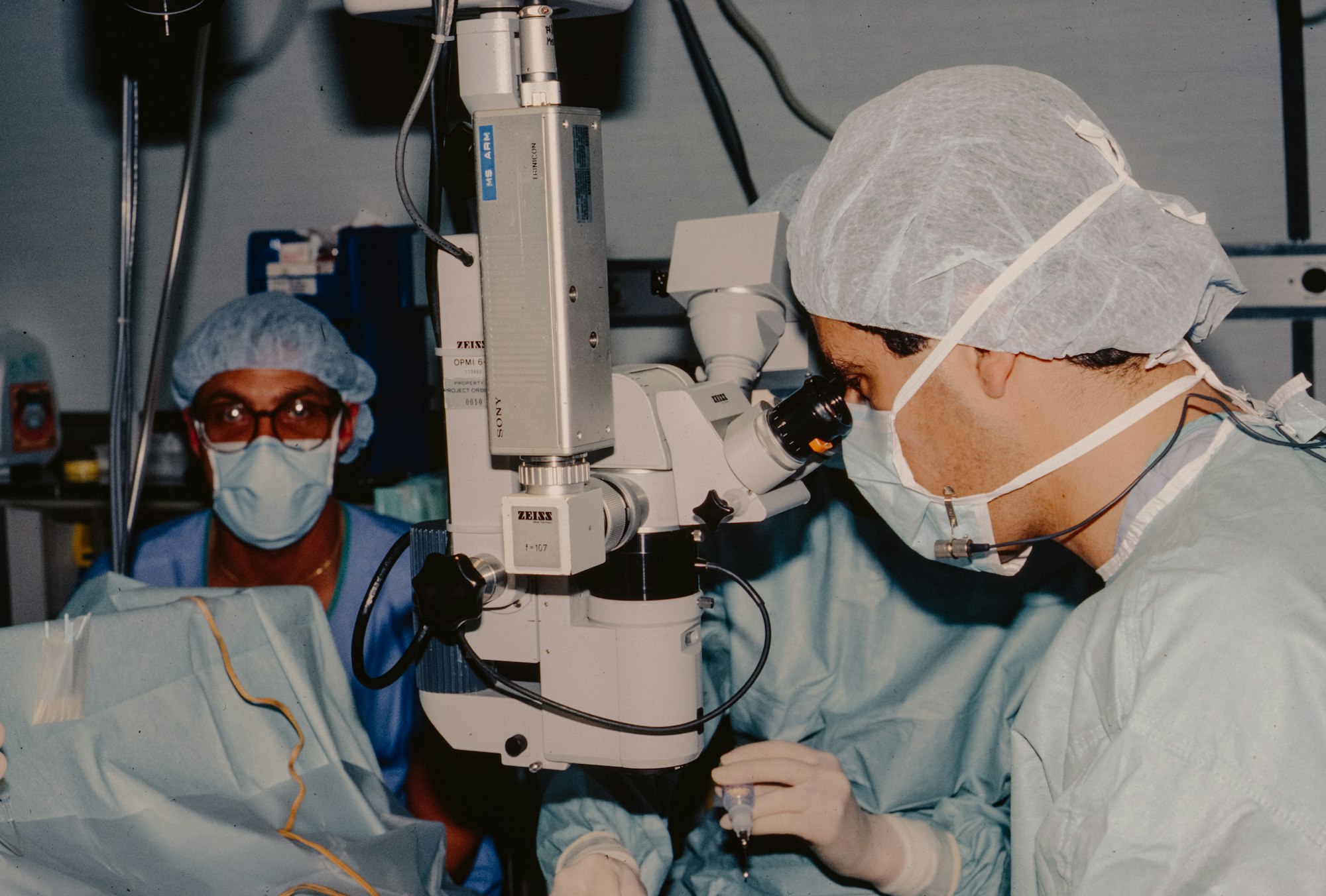
Your cornea is the clear, dome-shaped window at the front of your eye. It helps focus light so you can see. When it becomes scarred, swollen or misshapen, vision can turn blurry or full of glare.
If the cornea can't be healed or repaired, a corneal transplant may help. The National Eye Institute (NEI) notes that corneal transplants are the most common type of transplant surgery. This guide explains who may need one, the main types of surgery and what recovery is like, using information from the NEI and the American Academy of Ophthalmology (AAO).
What is a corneal transplant?
In a corneal transplant, a damaged or diseased cornea is replaced with clear, healthy tissue from a human donor. The AAO explains that donors choose to give their corneas after death, and all donated corneas are carefully tested to make sure they are healthy and safe to use.
Depending on which layers are damaged, the surgeon may replace the whole cornea or only some of its layers.
Why someone might need one
The AAO lists common problems that can damage the cornea, including:
- Keratoconus, when the cornea becomes cone-shaped instead of dome-shaped
- Fuchs' dystrophy, when cells in the inner layer of the cornea don't work well
- Eye infections or injuries that scar the cornea
- Earlier eye surgery that damaged the cornea
"For people with a deeply scarred or swollen cornea, transplant surgery can restore clear vision."
AMERICAN ACADEMY OF OPHTHALMOLOGY
Types of corneal transplant
- Full thickness (PK). In penetrating keratoplasty, the entire cornea is replaced and the donor cornea is stitched into place. The AAO says it has a longer recovery, and full vision may take a year or longer to return.
- Partial thickness (DALK). Only the front and middle layers are replaced, and the thin back layer is kept. It is commonly used for keratoconus. Healing is shorter, with less risk of rejection.
- Endothelial keratoplasty (DSEK/DSAEK or DMEK). Only the damaged innermost layer is replaced through a small incision, with few or no stitches. Much of the cornea is left untouched, which lowers the risk of rejection.
Your surgeon chooses the type of surgery based on your cornea's condition.
Before surgery
Your ophthalmologist will explain why you need surgery and what to expect. Tell them about every medicine you take, since you may need to stop blood thinners. The AAO notes your surgery date may change if a good donor cornea isn't ready, and you'll need someone to drive you home.
Know the warning signs of rejection
Rejection happens when the body's immune system attacks the new tissue. The AAO says to tell your ophthalmologist right away if you have eye pain, extra sensitivity to light, redness or cloudy or hazy vision. Prompt treatment can sometimes reverse rejection and save the transplant. (AAO)

Surgery day and recovery
A corneal transplant is done as an outpatient procedure. Here is what the AAO says to expect.
1. Numbing and comfort
Eye drops are placed in your eyes, and you may get medicine to help you relax. Your surgeon uses local or general anesthesia so you don't feel pain.
2. The transplant
Your surgeon replaces the damaged part of the cornea with donor tissue. For some partial transplants, an air bubble helps hold the new layer in place, and you may need to lie on your back for a while afterward.
3. The next day
You return to your ophthalmologist the day after surgery so your eye can be checked. Stitches may or may not need to be removed later, depending on how you heal.
4. Caring for your eye
Use your drops exactly as prescribed, don't press on or rub your eye, and wear glasses or a shield for protection. Ask your doctor which pain relievers are OK and when you can return to normal activities.
5. Long-term recovery
The AAO says it can take a year or more to fully recover, depending on the type of transplant. Some people may need glasses or more treatment for the best vision. (AAO)
Recovery checklist
- Arrange a ride home after surgery
- Go to your follow-up visit the next day
- Use your eye drops exactly as prescribed
- Don't rub or press on your eye
- Wear glasses or an eye shield for protection
- Call right away about pain, redness, light sensitivity or hazy vision
Corneal transplant care in Southern Utah
Corneal transplant is one of the services offered at Mountain Eye Institute's Cedar City ophthalmology practice. Our doctors can talk with you about whether a transplant, or another treatment, is right for your eyes. We also provide no-stitch cataract surgery and treatment of glaucoma.
Learn more about protecting your corneas in our guides to corneal abrasions and eye injuries and dry eye, or read about cataracts.
Sources
This article is for general education and isn't a substitute for advice from your eye doctor.
Have questions about your cornea?
Our team can examine your eyes and talk through your options, including whether a corneal transplant could help.

